.png)
How Prepress Can Support Deinkable and Recyclable Printing

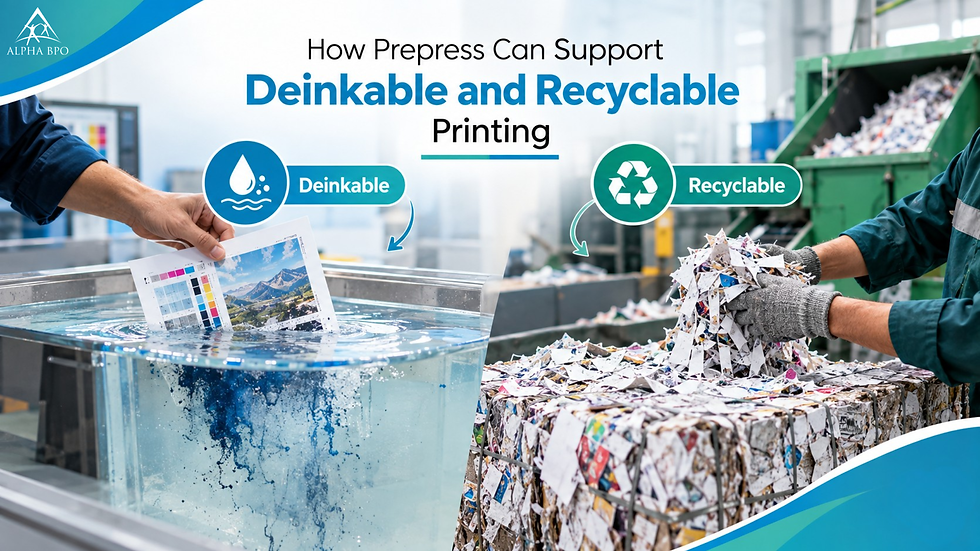
The major concern of printing companies is to reduce waste and deliver an excellent print-quality design. Also, it is proving hard for modern printing businesses to develop ways to balance sustainability and high-quality products. Customers desire products and solutions that are sustainable, brands want environmentally friendly manufacturing, and recycling laws encourage better and more efficient recycling processes.
Most of the challenges with recycling occur long before a product is printed and arrives in a recycling bin. Poor file preparation, excessive use of ink, and use of improper materials, among others, affect the ease with which printed products can be recycled. Prepress printing services can help remedy this challenge by implementing smart planning combined with deinkable printing prepress methods.
According to the Two Sides Trend Tracker report, environmental concerns play a major role when choosing printed materials. Many customers consider paper-based communication a sustainable option when it is produced responsibly. This blog examines how prepress can support deinkable and recyclable printing.
Deinkability: Key To Modern Printing Sustainability
The process of making paper products from old paper requires some removal of ink. This stage is called the deinking process. The better the separation of ink from the fiber, the better the quality of the recycled material.
Tightly bound inks, adhesives, plastics, or finishing treatments that have been used with the paper may cause poor-quality or unrecyclable recycled paper. This shows that, in addition to the selection of paper, the selection of the printing processes and preparation of the artwork also affects the sustainability of the final printed product. Good deinkable printing occurs much earlier in the prepress stages than most expect.
The Prepress Stage And Its Importance For Sustainable Printing
Prepress is the initial stage of a printing process in which digital files are corrected and optimized. Each change applied during prepress can affect the design’s ease of recycling. Before the printing process begins, digital prepress services are able to recognize potential problems that may arise in the print.
By identifying production problems before files reach the press, prepress teams can prevent defective runs and avoid unnecessary material waste.
The sustainable prepress processes will normally involve:
Quality control
Color optimization
File verification
Ink coverage optimization
Material verification
Reviewing print specifications
Closing the loop on these processes helps to minimize material waste in the production process and improve the quality of the final product.
Managing Ink Coverage To Improve Recycling
High ink coverage during printing has several implications during recycling. For one, it takes more chemicals, energy, time, and effort to process more ink during recycling. Prepress analyzes the artwork to find places to reduce unnecessary ink while preserving the overall appearance of the design. Prepress teams can optimize ink usage by:
Reduce total ink coverage.
Remove dark backgrounds where unnecessary.
Adjust color balance.
Choose colors that will be more efficient.
Change rich black settings.
Adjustments to these will allow for better ink coverage optimization when printing and will save money.
Choosing Recyclable Print Materials
Prepress specialists evaluate production specifications prior to printing to ensure that selected materials support recycling. Materials that may support recyclable print production include:
Recyclable packaging substrates.
Uncoated stocks.
Recyclable coated papers.
Sustainably certified papers.
Water-based coatings wherever applicable.
Some finishes can reduce performance when it comes to recycling. Identifying these finishes early can help the prepress specialist recommend a possibly better alternative that can help keep the print quality high while further heightening recyclability.
Environmental Responsibility During Printing
Sustainable printed solutions require cohesion throughout every step of the process. Prepress combines production and design to help reduce the environment’s impact during production. Along with eliminating excess paper waste, other goals of environmentally responsible printing are to:
Enable easier product recycling.
Use resources efficiently.
Reduce the number of adjustments.
Promote better color management.
Decrease paper waste.
Potential defects are resolved prior to printing, resulting in reduced reprint waste.
Improving File Preparation For Sustainable Production
Thoroughly prepared artwork helps to avoid errors during the production process that result in unnecessary wastage of production materials. Prepress printing services will analyze the following:
File compatibility.
Transparency.
File layers.
Bleed.
Color profiles.
Image resolution.
Font embedding.
Files that require very little or no adjustment during the printing process help to reduce wasted time and energy, and excess expense. This means proper file preparation prior to printing results in a faster, less wasteful, and more efficient sustainable printing workflow. Every printing issue that is corrected in the prepress stage helps to preserve resources during the printing process.
Color Management Supports Sustainability
Color management is more than consistent brand colors. When printing press color profiles are handled properly during the prepress stage, printers do not have to fix as much with the press.
Conserving color and ink.
Lowered energy usage.
Using less paper.
Reduced press setup time.
Shorter setup times do not compromise higher print quality and allow for greater print sustainability outcomes to be achieved.
Reduce Waste Before Printing
The greatest sustainability impacts are made before the first printed sheet is produced. Prepress staff minimize waste by:
Standardizing printing files.
Proofing the artwork and reducing artwork errors.
Reducing incorrect file submissions.
Avoiding unnecessary multiple file revisions.
Confirming production requirements.
Paper and printing time are saved with each issue that is resolved prior to production. Rather than correcting printing issues after the fact, prepress seeks to prevent printing issues from occurring.
Promoting Circular Printing Practices
A circular print economy exists around products that can be used and recycled efficiently. Printed materials that take recyclability into consideration on a higher level have a much greater potential to become raw materials for future paper production.
Through deinkable printing prepress, printing companies can produce materials that are more efficiently processed through the recycling system.
This solution can lead to improved fiber yield, less waste, better management of resources, and cleaner recycled pulp.
Now, with sustainability playing a larger role in purchasing decisions, printed products must retain their value after their initial use.
Why Businesses Are Investing In Sustainable Prepress
Most companies now evaluate the impact of their entire supply chain on the environment, and print production is now a large part of their sustainability efforts. Professional prepress printing services allow companies to meet their sustainability goals and increase production. The key benefits of eco-friendly print production are:
There is a decrease in the use of ink.
Improvements in the consistency of printed output.
Better sustainability reports.
There is less waste from production.
There are improvements in recycling.
More efficient production workflows.
These benefits are of interest to publishers, manufacturers, packagers, and owners of brands.
Develop A More Eco-Friendly Print Design With Smart Prepress Solutions
Sustainability is not an afterthought, and it is especially true in the printing world. Best practices in the prepress stages allow for reductions in waste and improve deinkable printing prepress while helping sustain the quality of recyclable printing.
Each choice that a printing company makes prior to each production run plays a vital role in the general environmental performance of the printing company. Prepress services allow print companies to invest in a sustainable printing workflow.
Before production, an infinite number of decisions are made in the selection of printing materials, and color management is necessary for the complete sustainability of a printing company. Deinkable printing prepress and the adoption of sustainable prepress solutions allow for higher- quality printed products that are more environmentally friendly.
Comments